
 Wellness Plan
 Order Medication
 Register Your Pet
 Book Online


 About Us


Equine gastroscopy
Why use gastroscopy
A gastroscopy is a reliable and effective method of diagnosing equine gastric ulcer syndrome. This examination allows visualisation and investigation of the stomach lining where ulcers may be present.
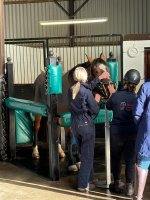
Before the gastroscope
Prior to the gastroscopy procedure, your horse must be starved for at least 14 hours; this includes hay and hard feed. Your horse can be fed an early evening meal as normal. Water should also be withheld prior to the procedure. It is advised that all bedding is removed from your horses stable too in case they eat the bedding. If your horse has not been starved correctly then the stomach cannot be fully examined and therefore the ulcers may not be seen.
We recommend you bring your horse to the practice the night before so we can ensure they are starved correctly and make sure they are settled prior to the gastroscopy. Contact us now, if you haven’t already to confirm a time you plan to bring your horse in the day before the procedure.
On arrival, one of our vets or nurses will meet you and help your horse get settled in
That evening we will remove hay and any feed from your horses stable by 10pm the night before. Their water is then removed at 6am.
Please bring any rugs or feed that your horse may require. We can provide hay however we recommend to bring your own as that’s what your horse is used to.
The Gastrsocope Procedure
We always perform the gastroscopy procedure first thing in the morning.
The gastroscopy is done under standing sedation and is performed by inserting a flexible fibreoptic camera up one of your horses’ nostrils. It is then passed to the back of the throat and swallowed into the oesophagus. The camera is then passed down the oesophagus and into the horse’s stomach. The gastroscopy examination will then be recorded and the stomach lining will be explored for ulcers. Whilst the procedure is not painful horses can feel a little discomfort when passing the scope through the nostrils.
Once the gastroscopy is complete and your horse has come round from the sedation we will offer them the hay and feed you have left for them and some water.
Our vet will call you with their findings from the procedure and discuss treatment and management going forward, and organise a suitable time for you to come and collect your horse later that day.
Side effects
There are rarely any side effects with the gastroscopy, however occasionally horses may show mild colic like symptoms which can be caused by distension of the stomach due to the air that is used when inflating the stomach. This is usually mild and easily treated. Sometimes horses may get a small nose bleed which is harmless and will stop within a short time.
Treatment
If the gastroscopy examination reveals gastric ulcers are present in the stomach, we will grade them and discuss treatment and management options with you. The treatment for ulcers depends on the severity and can range from a short course of weekly injections to a oral paste given daily.
During and after your horse’s treatment we will discuss management and feeding regime which can be helpful to preventing recurrence of gastric ulcers.
We also recommend a follow up gastroscope to monitor progress and check treatment is effective.
Equine gastroscopy clinics
Here at Station House Vets we run regular gastroscopy clinics. The clinics enable us to offer a discounted rate of £160 which includes overnight stabling and the gastroscopy with sedation.
Call Carmen or Katie on 01653 618303 to find out when our next gastroscopy clinic is – or follow us on Facebook as we regularly pre advertise the clinic dates on social media.
Visit our pricing page to find out the price of a standard gastroscopy – and the discounted rate we offer at our regular gastroscopy clinics : Prices
What happens at a gastroscopy?
Watch our short video above.
Equine gastroscopy
Why use gastroscopy
A gastroscopy is a reliable and effective method of diagnosing equine gastric ulcer syndrome. This examination allows visualisation and investigation of the stomach lining where ulcers may be present.
Before the gastroscope
Prior to the gastroscopy procedure, your horse must be starved for at least 14 hours; this includes hay and hard feed. Your horse can be fed an early evening meal as normal. Water should also be withheld prior to the procedure. It is advised that all bedding is removed from your horses stable too in case they eat the bedding. If your horse has not been starved correctly then the stomach cannot be fully examined and therefore the ulcers may not be seen.
We recommend you bring your horse to the practice the night before so we can ensure they are starved correctly and make sure they are settled prior to the gastroscopy. Contact us now, if you haven’t already to confirm a time you plan to bring your horse in the day before the procedure.
On arrival, one of our vets or nurses will meet you and help your horse get settled in
That evening we will remove hay and any feed from your horses stable by 10pm the night before. Their water is then removed at 6am.
Please bring any rugs or feed that your horse may require. We can provide hay however we recommend to bring your own as that’s what your horse is used to.
The Gastrsocope Procedure
We always perform the gastroscopy procedure first thing in the morning.
The gastroscopy is done under standing sedation and is performed by inserting a flexible fibreoptic camera up one of your horses’ nostrils. It is then passed to the back of the throat and swallowed into the oesophagus. The camera is then passed down the oesophagus and into the horse’s stomach. The gastroscopy examination will then be recorded and the stomach lining will be explored for ulcers. Whilst the procedure is not painful horses can feel a little discomfort when passing the scope through the nostrils.
Once the gastroscopy is complete and your horse has come round from the sedation we will offer them the hay and feed you have left for them and some water.
Our vet will call you with their findings from the procedure and discuss treatment and management going forward, and organise a suitable time for you to come and collect your horse later that day.
Side effects
There are rarely any side effects with the gastroscopy, however occasionally horses may show mild colic like symptoms which can be caused by distension of the stomach due to the air that is used when inflating the stomach. This is usually mild and easily treated. Sometimes horses may get a small nose bleed which is harmless and will stop within a short time.
Treatment
If the gastroscopy examination reveals gastric ulcers are present in the stomach, we will grade them and discuss treatment and management options with you. The treatment for ulcers depends on the severity and can range from a short course of weekly injections to a oral paste given daily.
During and after your horse’s treatment we will discuss management and feeding regime which can be helpful to preventing recurrence of gastric ulcers.
We also recommend a follow up gastroscope to monitor progress and check treatment is effective.
Equine gastroscopy clinics
Here at Station House Vets we run regular gastroscopy clinics. The clinics enable us to offer a discounted rate of £160 which includes overnight stabling and the gastroscopy with sedation.
Call Carmen or Katie on 01653 618303 to find out when our next gastroscopy clinic is – or follow us on Facebook as we regularly pre advertise the clinic dates on social media.
Visit our pricing page to find out the price of a standard gastroscopy – and the discounted rate we offer at our regular gastroscopy clinics : Prices
What happens at a gastroscopy?
Watch our short video above.